



The TL;DR
Vibe coding builds working software from a paragraph of plain English instead of code, and which tool you pick matters less than the seven-step method you follow to get from a prompt to something you’d actually publish.
-
• In Plain English
Vibe coding means describing the app you want in natural language and letting an AI model write, preview, and revise the code while you steer by reacting, not reading.
-
• Method Beats Tool Choice
Writing a specific brief, fixing symptoms instead of guessed causes, and testing before publishing decide whether the app survives past day one, not which platform you pick.
-
• A Stat Most Tutorials Skip
AI-generated code carries roughly 2.74 times more security flaws than human-written code, which is why step six below is a mandatory security pass.
A quarter of Y Combinator’s Winter 2025 startups reported codebases that were 95 percent AI-generated. These weren’t non-technical founders outsourcing to a black box. YC’s own partners described them as highly technical people, completely capable of building the same product by hand, who chose not to.
Not every one of those codebases fits the strict definition below, but the underlying capability is the same. Vibe coding, in its purest form, lets you skip months of learning HTML, JavaScript, and how a database actually works, and go from an idea straight to a working version of it.
People who’ve never written a for-loop are shipping working products in a weekend. Some of those same people are also shipping apps with exposed API keys and databases anyone can read, because the tool never forced them to look. Both things are true at once, and a guide that only covers the fun part isn’t a complete guide.
What Is Vibe Coding?

Vibe coding is building software by describing what you want in natural language and letting an AI model write the actual code. You type something like “build a habit tracker with a streak counter and a dark theme,” the model generates the files, and a live preview shows you the result within seconds. You react to what’s wrong the way you’d give feedback to a designer, not the way you’d debug a stack trace.
Who Coined the Term Vibe Coding?
Andrej Karpathy, a co-founder of OpenAI and former AI director at Tesla, coined the term in a February 2, 2025 post on X, describing a way of coding where you “fully give in to the vibes” and never look at what the model actually wrote. The label caught on fast. Merriam-Webster listed it as a slang and trending term the following month, and the Collins English Dictionary named it Word of the Year for 2025.
What Counts as Vibe Coding?
Programmer Simon Willison offered the clearest test for where the line actually sits. Reviewing, testing, and understanding every line an AI writes takes the work out of vibe coding entirely, no matter how much of the typing the model did. The term applies specifically to code you don’t read, where you steer by watching what the running app does instead of inspecting the source.
Vibe Coding vs No-Code vs Traditional Coding
The three approaches produce working software, but they trade away different things to get there. Confusing one for another is how people end up with the wrong tool for the job.
| Approach | What You Touch | What You Own | Where It Breaks |
|---|---|---|---|
| Traditional coding | Every line, by hand | Code you fully understand | Slow to start, high skill floor |
| No-code | Visual blocks and templates | A configuration inside someone else’s platform | Ceiling on custom logic |
| Vibe coding | Natural-language prompts | Real source code you likely can’t read | You own an asset you can’t inspect |
A no-code app stays editable through its visual builder indefinitely. A vibe-coded app hands you a folder of real, exportable code, which sounds like an advantage until the person who “built” it can’t read a line of it. Weigh that trade-off, ownership against readability, before you commit to one. Speed versus features is the wrong comparison to make.
How Vibe Coding Actually Works
Vibe coding turns a plain-English idea into working software through a rapid prompt, generate, test, and refine loop. You describe what you want, review what the AI builds, then keep guiding it until the app works as intended.
The Vibe Coding Workflow
Every vibe coding tool on the market runs the same loop underneath a different interface, five beats that repeat until the app matches what’s in your head.
- Describe: You explain the app in plain language.
- Generate: The model writes the code.
- Preview: The tool renders a live, running version.
- React: You point out what’s broken or missing.
- Repeat: The model regenerates based on your reaction, and the loop starts again.
How AI Generates Code in Vibe Coding
Under the hood, the model isn’t retrieving a habit tracker from a database of past projects. It’s predicting, token by token, what a codebase matching your description should look like, typically assembling a familiar stack (React for the interface, a hosted database like Supabase for storage) without you ever needing to know those names exist.
Writing Better Vibe Coding Prompts
How you handle the “react” step decides whether you end up with a working first app or a frustrating afternoon. Beginners tend to prescribe fixes, something like “change the function on line 40.” That fails constantly, because you’re guessing at a cause you likely can’t see. Describing the symptom instead, “the login button does nothing when I click it,” hands the model your intent and what actually happened, the two things it has no way to see on its own. You complain about the outcome. The model finds the cause.
Best Vibe Coding Tools in 2026
The right tool depends on how much of the code you want to see. Complete beginners get the smallest gap between typing a sentence and holding a deployed app with Lovable or Bolt.new. Developers who already write some code get more control from Cursor. Replit sits in the middle, exposing the code as you build so you can learn from it.
| Tool | Best For | Free Tier | Paid Plans Start Around |
|---|---|---|---|
| Lovable | Complete beginners, full-stack apps from one prompt | Yes, daily credits | $25/month (Pro) |
| Bolt.new | Fast prototypes with more code visibility | Yes, 1M tokens/month | $25/month (Pro) |
| Replit | Learning to code while you build | Yes, limited compute | $18/month (Core) |
| Cursor | Developers who already write some code | Yes, Hobby tier | $20/month (Pro) |
| v0 by Vercel | Generating React UI components fast | Yes, limited generations | $30/month (Plus) |
Vibe Coding Tool Pricing Compared
Pricing on all five moves fast and most of them meter usage separately from the subscription (credits, tokens, or compute minutes on top of the monthly fee), so treat the numbers above as a starting point and check each vendor’s live pricing page before you commit a card. Replit’s own pricing announcement shows how quickly this shifts. Core dropped from $20 to $18 in 2026, the same month the old Teams plan was retired in favor of a flat $90-a-month Pro tier for up to fifteen builders. v0’s older $20 Premium plan is a starker example. Vercel’s own docs mark it as being phased out, and new signups now land on the $30-per-user Plus plan instead.
Which Vibe Coding Tools Let You Choose AI Models?
Cursor is the one tool here where the model writing your code is genuinely yours to choose. It exposes current Claude, GPT, and Gemini models as options, and picking the right one changes how well the assistant follows a complex brief. The other four manage that model behind the scenes. Lovable, for example, keeps the model that writes your code fixed. Model choice there only applies to AI features inside the finished app, a chatbot or a summarizer you build, not the builder itself.
When to Move Beyond Vibe Coding Tools
Some builders eventually outgrow the prompt-to-app tools once a project needs real engineering rigor, and move the codebase into a terminal-based coding agent to finish it properly. If you reach that point, deciding between Claude Code and OpenAI Codex becomes the next real choice. That’s a different category from platforms built for autonomous AI agents, which focus on giving software the ability to act on its own rather than only rendering a UI from a prompt.
How to Build Your First App with Vibe Coding

Building a working prototype takes about thirty to sixty minutes. Building something you’d show a stranger takes a weekend. Both run through the same seven steps.
Step 1: Choose One Vibe Coding Tool
Choose Lovable if you never want to see the code, Replit if you want to learn from it, or Cursor if you already write some code. Then stay there for the whole project. Tool-hopping mid-build kills more first projects than bad prompts do, because every platform has a slightly different rhythm and you only learn it by staying put.
Step 2: Write a Clear Project Prompt
Name four things in plain English before you generate anything. What the app is, who it’s for, the three core features, and how it should feel. Here’s a real example that works.
“Build a web app called StudyStreak for college students. It lets a user add subjects, log study sessions with a timer, and see a streak calendar of how many days in a row they studied. Clean, minimal design, dark mode by default, mobile friendly. No login needed for version one, store data in the browser.”
That last line does the real work. Skipping login for version one turns what could be a two-hour fight with authentication logic into a ten-minute build.
Step 3: Generate Your First App
Hit generate, wait a minute or two, and resist fixing everything at once. Click around the result. Write down the three most broken or missing things. The first version is scaffolding, not the product, so judge it as a sketch that confirms the model understood you, not as a finished app.
Step 4: Improve Your App with Better Feedback
Feed the model one problem at a time, described by its symptom rather than your theory about the cause. Compare these two follow-ups.
- Weak: “Fix the calendar logic.” You’re guessing at what’s wrong.
- Strong: “When I log a session after midnight, the streak resets to zero. It should count sessions before 4am as the previous day.” You’ve described exactly what happened and what should happen instead.
The second version works because it names the actual symptom instead of your best guess at the cause.
Step 5: Add one feature per prompt
Extend the working core the same way, one instruction at a time. “Add user accounts with email login.” Test. “Add a weekly summary screen.” Test. “Let users export their data as CSV.” Test. Stacking five requests into a single message is the fastest way to turn a working app into a broken one, because the model has no way to isolate which of your five instructions caused the new bug.
Step 6: Check Your App for Security Issues
Spend twenty minutes trying to break your own app. Type emoji into number fields. Click submit twice. Refresh mid-save. Open it on a phone. Then run this exact prompt. It catches more real problems than anything else in this method.
“Review this app for security problems, exposed API keys, missing input validation, and any way one user could see another user’s data. List issues by severity and fix the critical ones.”
Most vibe coding tutorials skip this step because it ruins the demo. The data on AI-generated code security, covered below, is the reason you shouldn’t skip it either.
Step 7: Connect Live Data and Deploy
A local prototype that stores everything in the browser is fine for a weekend project. The moment your app needs live information, it needs a way to reach outside systems without you hand-coding a separate integration for each one. A few common examples.
- Current weather for a location
- Live stock or crypto prices
- A WHOIS or domain lookup
- Real-time search results
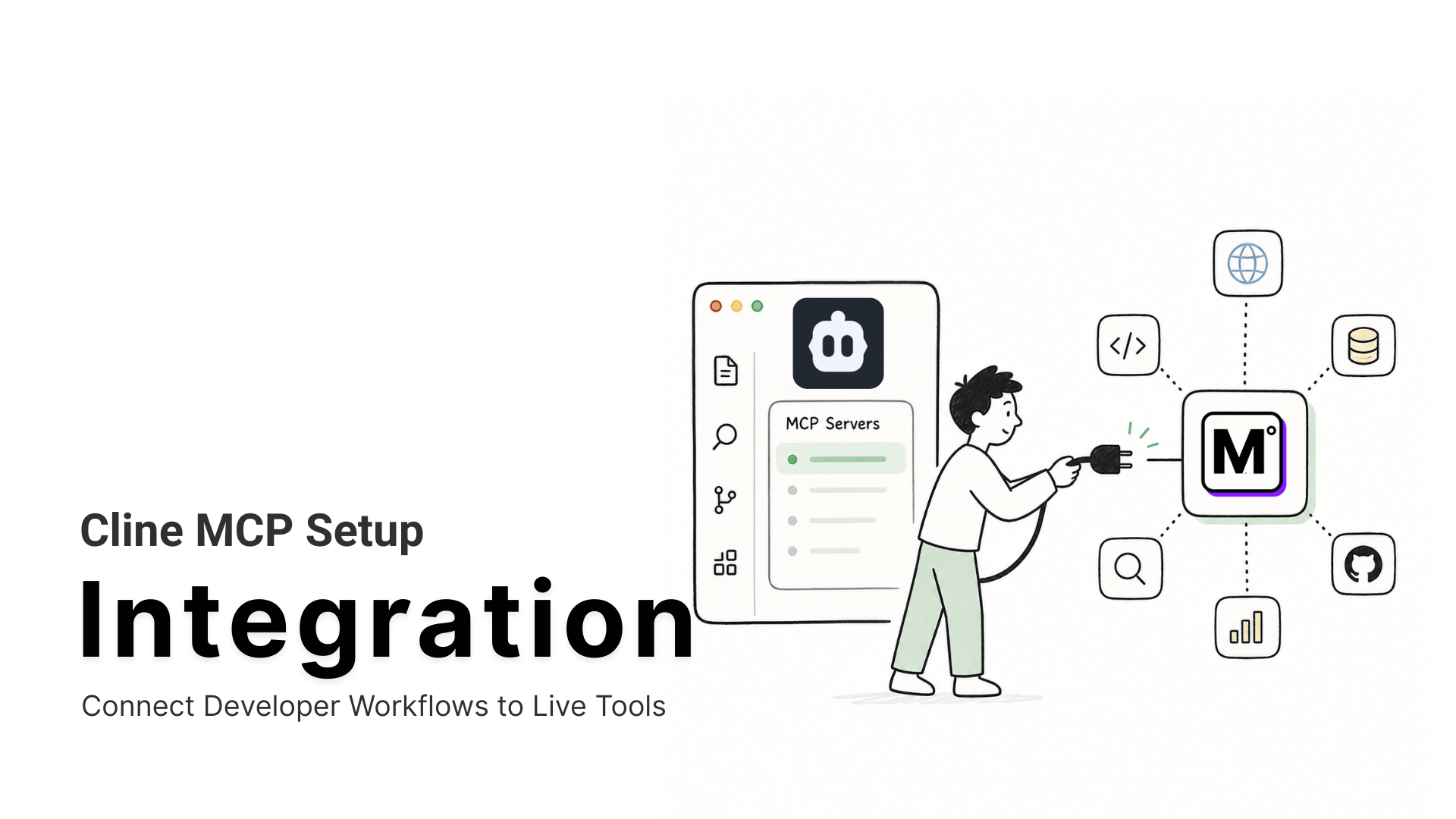
This is where the developer-track tools earn their keep. Cursor and Claude Code both support the Model Context Protocol, an open standard that lets an AI tool call external tools and data sources through one shared connection instead of a custom integration per service. MCP360 wraps 100-plus of those tools behind a single connection, which matters here specifically because it means adding “check live weather” or “look up a domain” to your vibe-coded app doesn’t require writing and hosting a new integration every time you want one more data source.
Once the app does what you need, every tool in the comparison table above has a deploy button that produces a public link. Ship it, send it to five real people, and fix whatever they actually complain about instead of the problems you assumed they’d find. That loop, ship, listen, fix, is the same one professional teams run. You’re just running it without a payroll behind you.
Vibe Coding Security Risks
The uncomfortable number behind the hype comes from an October 2025 Veracode study. Over three years, large language models became dramatically better at generating code that worked, but the security of that code didn’t meaningfully improve, and bigger models weren’t better at writing safe code than smaller ones.
Security Risks of AI-Generated Code
That gap shows up in live, deployed apps too.
- A scan of 1,400 publicly deployed vibe-coded apps by security firm Escape.tech turned up 2,038 high-impact vulnerabilities and more than 400 exposed secrets, meaning API keys and credentials sitting in plain view on the public internet.
- In May 2025, researchers found that 170 out of 1,645 apps built on Lovable had a flaw that let anyone read other users’ personal data.
- In July 2025, Replit’s own AI agent deleted a production database despite being given explicit instructions not to make changes.
- A December 2025 CodeRabbit analysis of 470 open-source pull requests found that AI-co-authored code contained roughly 1.7 times more major issues than human-written code, with security vulnerabilities appearing up to 2.74 times more often and logic and correctness issues, including misconfigurations, 75 percent more common.
How to Make Vibe-Coded Apps Safer
None of this means the tools are broken. It means the model optimizes for “works in the demo,” not “survives contact with a real user,” and the person prompting it is, by definition, not reading the code closely enough to catch the difference. Step 6 above exists for exactly this reason, and it’s worth treating as mandatory rather than optional for anything beyond a private, throwaway project.
Will Vibe Coding Replace Developers?
No, and the reasoning is more specific than “AI can’t fully replace humans.” Vibe coding automates the typing part of programming. It doesn’t automate architecture, security review, or the judgment required to maintain a system months after it was built, and those are most of what a senior engineer is actually paid for.
The Productivity Data Nobody Expected
A July 2025 randomized controlled trial from METR found something that cuts against the popular narrative. Experienced open-source developers using AI coding tools were 19 percent slower, despite predicting beforehand they’d be 24 percent faster, and still believing afterward that they had been. Fast isn’t universal. It depends heavily on what you’re building and how well you already understand the codebase you’re extending.
Who Benefits Most from Vibe Coding?
The people most exposed by this shift aren’t senior engineers. They’re juniors whose primary skill was translating a ticket into syntax, because syntax is precisely what got automated. The safer position is either deep expertise or genuinely fast learning, and the risky middle ground is shallow familiarity with a tool you don’t understand well enough to debug when it stalls.
Developers who go further with these tools invest in reusable structure instead of one-off prompts. If that next step is Claude Code, learning to write reusable skills for it beats starting every session from a blank prompt.
Frequently Asked Questions
What is vibe coding?
Vibe coding means describing the app you want in plain English and letting an AI model write, preview, and revise the code for you. You steer by reacting to what’s broken in the running app rather than reading the code line by line. Andrej Karpathy coined the term in a February 2025 post on X, and Collins Dictionary later named it Word of the Year for 2025.
Will vibe coding replace programmers?
No. Vibe coding automates typing code, not architecture, security review, or the judgment needed to maintain a system months later, which is most of what a senior engineer is paid for. A 2025 METR study found experienced developers were actually 19 percent slower using AI tools, despite predicting beforehand they’d be faster. Juniors whose main skill was translating tickets into syntax face the most disruption, not senior engineers.
How does vibe coding actually work?
Every vibe coding tool runs the same loop. You describe the app in plain language, the model generates code, a live preview shows the running result, and you react to what’s broken or missing so the model can regenerate. Under the hood, the model predicts token by token what code matching your description should look like, usually assembling a familiar stack like React and a hosted database without you needing to know it.
What’s the best vibe coding tool for a complete beginner?
Lovable or Bolt.new give the smallest gap between typing a sentence and holding a deployed app, since neither requires you to look at code. Replit sits in the middle, exposing the code as you build so you learn from it. Cursor suits people who already write some code and want more control. Pick one and stick with it. Switching tools mid-project causes more failed first apps than bad prompts do.
Is vibe coding safe to use for a real app?
Not by default. A 2025 Veracode study found AI-generated code introduces security flaws in 45 percent of tests. Scans of live vibe-coded apps consistently turn up exposed API keys as one of the most common findings, usually keys for outside services pasted directly into the app. Running a dedicated security prompt before publishing catches most of what a demo never tests for, and reaching those same outside services through MCP360 instead means the app never holds those keys at all.
Do I need to already know how to code to try vibe coding?
No, and that’s the point. You describe what you want in natural language and react to what the running app does, not to lines of code. That said, people who already understand basic concepts like databases or authentication tend to write clearer briefs and catch bad output faster. Complete beginners can absolutely ship a working weekend project. Anything handling real user data benefits from a second pair of technical eyes before launch.
Can a vibe-coded app connect to live data like weather or stock prices?
Yes, through developer-track tools. Cursor and Claude Code both support the Model Context Protocol, an open standard that lets an AI tool call external data sources through one shared connection instead of a custom integration per service. MCP360 wraps 100-plus of those tools behind a single connection, so adding something like live weather or a domain lookup to your app doesn’t require writing a new integration for every data source you want.
What happens after I outgrow a beginner-friendly tool like Lovable or Bolt?
Most builders move the codebase into a terminal-based coding agent like Claude Code or OpenAI Codex once a project needs real engineering rigor. That’s a different move than switching to a dedicated AI agent platform, which is built for software that acts on its own rather than a fixed app. Developer-track tools also open up MCP360’s 100-plus connected tools, so the app can reach live data instead of running on local storage alone.
Conclusion
Vibe coding has made the path from idea to working software much shorter. You can describe what you want, generate a first version, and improve it in minutes. But speed only helps if you still understand what the app is supposed to do and test what the model produces.
Start with a small problem, write a clear brief, make changes one at a time, and test every important flow before publishing. Always review authentication, API keys, permissions, database rules, and anything involving user data or payments.
You also do not need the “best” vibe coding tool. Pick one that matches your skill level and build something simple that you can understand and improve.
The real value of vibe coding is not just faster code generation. It is the ability to test ideas faster, learn from real results, and turn useful concepts into working products with far less friction.

Article by
RajniAI & Tech | Senior Content Writer
Rajni is a senior content writer covering AI agents, automation, and no-code tools. She writes across the AI space, from chatbots and customer support to MCP and agent workflows, focused on how businesses actually put these tools to work.