


The TL;DR
GitHub Copilot’s usage-based billing turned agent mode into a metered product, leading some developers to move coding-agent work across multiple tools to keep costs visible and controlled.
-
• Premium Request Units Are Gone
Copilot now charges by token usage, and there is no fallback model once included credits run out. Agent mode can therefore continue generating additional usage costs instead of switching to a lower-cost option.
-
• Bills Increased Sharply
Developers reported agent-mode bills rising from $29 to $750 and from $50 to $3,000, with increases of 10 to 50 times discussed in GitHub’s community forum and independent reporting.
-
• Developers Are Splitting Their Workflows
Coding-agent tasks are increasingly being distributed across Claude Code, Cursor, OpenRouter, local models, and shared tool layers so teams can compare costs, control model usage, and spot spending before the invoice arrives.
A developer in GitHub’s community forum calculated that an ordinary day of using Copilot’s agent mode had consumed roughly 360 AI credits. With 7,000 credits included in the Copilot Pro+ plan, continuing at the same pace could exhaust the monthly allowance before the billing cycle ended.
That calculation highlights the practical impact of GitHub Copilot’s move to usage-based billing. From June 1, 2026, GitHub replaced flat Premium Request Units with AI Credits tied to token consumption. Code completions remain included, but agent mode, chat, and code review can consume credits quickly, particularly during long, multi-step coding sessions.
Early community reports suggest that sustained agent usage can cost far more than many developers expected. Some users projected monthly spending several times higher than their previous subscription costs, especially when running expensive models across large repositories. These examples are not representative of every Copilot user, but they expose a broader issue facing engineering teams: agentic coding tools can generate substantial and difficult-to-predict token usage.
The result is not simply a move away from GitHub Copilot. Developers and teams are beginning to divide workloads across coding agents, model providers, local models, and routing layers to gain clearer control over cost, model choice, and tool access.
To understand why these bills can rise so quickly, it helps to look at how coding agents consume tokens and why one seemingly simple task may involve dozens of model calls.
What Changed in Copilot Billing
Before June 1, every Copilot interaction cost one flat Premium Request Unit, whether it was a one-line autocomplete or a six-hour autonomous refactor. That flat unit is gone.
Copilot now bills in GitHub AI Credits, worth a cent each, tied to actual token consumption per model.
Credit Allowances by Plan
- Pro ($10/month) includes $15 in credits.
- Pro+ ($39/month) includes $70 in credits.
- Max ($100/month) includes $200 in credits.
- Business ($19/user) and Enterprise ($39/user) get credit allowances matching their subscription price, plus temporary bonus credits through August before allotments revert to standard levels on September 1.
Code completions and Next Edit Suggestions stayed free and unlimited. Agent mode, chat, and code review did not. Code review now also draws on GitHub Actions minutes on top of AI credits.
Run out of credits and GitHub keeps you working by billing extra automatically, unless you’ve set a spending cap yourself.
Why Token Costs Compound in Agent Mode
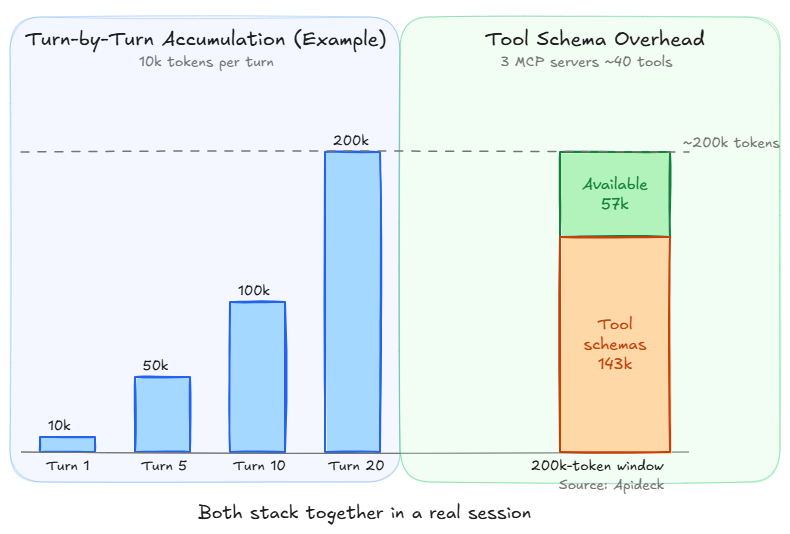
Agentic billing doesn’t scale the way most people expect. A coding agent isn’t one model call. It’s a loop, and every turn re-sends the full conversation history back into the context window. A 20-turn session at 10,000 tokens per turn doesn’t use 200,000 tokens total. It processes close to that number on turn twenty alone, because the model reprocesses everything that came before it.
The Turn-by-Turn Accumulation Effect
Tech Times’ reporting on the GitHub forum captured that accumulation effect in three examples.
- One Pro+ subscriber burned roughly 8% of a 7,000-credit month in two hours.
- Another spent more than $6 on a single change request.
- A session using Claude Opus 4.8 to patch a handful of website bugs consumed 1,180 credits, 16% of a Pro+ month, for output the developer called unremarkable.
A separate Stanford Digital Economy Lab study, published on arXiv, measured the same effect from a different angle. Agentic coding tasks consume roughly 1,000 times more tokens than single-turn code reasoning or chat, and input tokens drive that cost more than output does. An agent has to re-read its own prior actions before every new one, so the context grows with each step instead of resetting.
The Tool-Schema Overhead Problem
There’s a second driver behind these numbers that gets less attention than the accumulation effect, and it has nothing to do with which model is running. Every tool an agent can call, GitHub’s API, a database, a search endpoint, gets its full schema loaded into context on every request, whether that tool ends up being used or not. A widely cited Apideck benchmark found three MCP servers, about 40 tools total, eating 143,000 of a 200,000-token context window before a single question got processed. That’s not a Copilot-specific problem. It shows up in any agent connected to enough tools, and it stacks on top of the turn-by-turn accumulation above rather than replacing it.
Agentic Coding Costs Beyond Copilot
Copilot isn’t an isolated case. The same math is playing out anywhere agentic tools got handed to a large engineering org without a spending ceiling attached.
- Uber burned through its entire 2026 AI coding budget by April, four months into the year, after rolling Claude Code out across its engineering org. It responded with a $1,500-per-employee, per-tool monthly cap on Claude Code and Cursor.
- Microsoft began canceling internal Claude Code licenses across its Windows and Microsoft 365 division in May, with a June 30 deadline pushing engineers toward Copilot CLI instead, citing cost pressure and platform control.
- OpenRouter, the model-routing marketplace absorbing a lot of the displaced demand, closed a $113 million round at a $1.3 billion valuation in May, now processing 25 trillion tokens a week, five times its volume from six months prior.
The pattern repeats each time. Agentic tools got adopted faster than anyone built spending guardrails for them, and the bill eventually catches up.
Where Developers Are Moving
As Copilot’s agent costs become less predictable, developers are spreading workloads across several alternatives. Each offers a different balance of pricing, model access, and infrastructure control.
| Destination | Cost Model | Main Trade-off |
|---|---|---|
| Claude Code | Pro $20, Max 5x $100, Max 20x $200 | Limited to Anthropic models |
| Cursor | $20 Pro plan with usage credits and Auto mode | Premium model selection can consume credits quickly |
| OpenRouter + RooCode | Pay per token across hundreds of models | No fixed spending ceiling |
| LM Studio | Free software using local hardware | Performance depends on the available GPU |
Cursor Is Still Usage-Based
Cursor is often described as a flat-rate alternative, but its pricing still depends on model usage. The $20 Pro plan includes a usage allowance, while manually selecting more expensive models can consume it faster. Auto mode offers greater predictability by selecting models automatically, but it does not make every workflow unlimited.
Model Switching Does Not Remove Tool Overhead
These alternatives mainly change which model runs the task and how that model is billed. They do not automatically reduce the context consumed by connected tools.
An agent linked to GitHub, a database, and a search service may still load large tool definitions regardless of whether it runs through Copilot, Claude Code, OpenRouter, or a local model. Anthropic has shown that loading tools only when required can reduce this overhead substantially.
MCP360 applies this approach by exposing more than 100 tools through search_tools and execute_tool. Instead of loading every schema into each prompt, the agent retrieves only the relevant tool details. This also allows teams to change models without rebuilding the underlying integrations.
Managing Credentials Across Multiple Providers
Using several coding tools introduces more API keys, OAuth permissions, billing dashboards, and data flows. Without clear controls, that flexibility can create security and operational risk.
Give each credential only the permissions required for its task, and avoid reusing broad-access tokens across providers. Rotate keys regularly and track usage separately so unusual activity appears before it becomes a billing or security issue.
Teams should also review the security and compliance posture of any service connecting agents to live systems. MCP360, for example, supports SOC 2 Type II and ISO 27001 controls and is designed to support GDPR requirements.
Data movement deserves the same attention. When an agent retrieves customer information through one service and sends it to another model provider, it creates an additional data path that must be documented and governed.
Once workflows span multiple providers, credential ownership, access controls, and data handling need to be managed as part of the infrastructure rather than left to individual developers.
Control Costs Before the Next Billing Cycle
Teams trying to avoid unexpected Copilot costs can take three practical steps.
First, set a clear budget for additional usage. Once included credits run out, further usage requires an approved spending budget, so teams should define that limit before agent workloads increase.
Second, review the billing dashboard to identify which sessions consume the most credits. In many reported cases, a small number of long agentic tasks account for more usage than routine autocomplete or short chat requests.
Third, assign each tool to the work it handles best. Copilot can remain useful for code completions, while longer agent tasks move to another provider when its pricing or model is a better fit.
A shared MCP layer can support this setup by keeping tool integrations separate from the model running the task. MCP360 follows this approach, allowing teams to connect tools once and reuse them across different agents and providers.
Frequently Asked Questions
What is GitHub Copilot’s usage-based billing?
Starting June 1, 2026, GitHub Copilot began billing by actual token usage instead of flat request counts. Chat, agent mode, and code review now draw from a monthly credit pool, worth a cent each, while code completions stay free and unlimited.
Why did GitHub Copilot get so expensive?
Two things drive the cost up. Agent mode resends the entire conversation on every turn, so a long session can process close to 200,000 tokens by the end. Separately, every tool an agent can use loads its full definition into that same context on every request, whether it gets used or not.
How much did GitHub Copilot prices go up in 2026?
Developers running agent mode reported bills 10 to 50 times higher in the first billing cycle. Examples included jumps from $29 to $750 and from $50 to $3,000, per GitHub’s community forum and independent reporting.
What happens when I run out of GitHub Copilot credits?
GitHub keeps you working and bills the extra usage automatically at published rates. The only way to stop that is to set a spending cap in advance.
Is Cursor a flat-rate alternative to GitHub Copilot?
Not fully. Cursor’s $20 monthly plan looks flat but isn’t, it buys a $20 credit pool that depletes based on the model you pick. An unlimited Auto mode helps, but heavier model use still draws the pool down.
Why are developers moving away from GitHub Copilot for agentic coding?
Many are splitting work across other tools instead of relying on one meter. Claude Code and Cursor offer more predictable pricing, OpenRouter and RooCode offer pay-per-token model choice, and LM Studio runs models locally for free. Some also add a shared tool layer, our own MCP360 gateway is one option, so switching models doesn’t mean rebuilding every integration.
What is an MCP gateway and why does it matter for AI costs?
An MCP gateway sits between an AI agent and its tools, loading each tool’s details only when needed instead of all at once. This matters because unused tool definitions can quietly eat most of an agent’s context window. MCP360 uses this approach across 100+ tools, so adding more tools doesn’t add more overhead.
How do I manage API keys across multiple AI coding tools?
Give each API key only the access it needs, rotate keys on a schedule, and log usage per provider so spikes are visible early. Also check the compliance record of anything sitting between your agent and live systems, our own MCP360 gateway holds SOC 2, GDPR, and ISO 27001 certifications, for example.
Conclusion
GitHub Copilot’s move to usage-based billing is part of a broader shift in AI coding. As agents take on longer and more complex tasks, teams can no longer judge cost by the monthly subscription price alone. They also need to account for model choice, session length, tool usage, and the controls placed around each workflow.
The practical response is not to replace Copilot with a single alternative. It is to match each task with the most suitable model, set clear usage limits, review consumption regularly, and keep tool integrations independent from the provider running the agent.
That separation gives teams more control when prices, models, or internal requirements change. A shared MCP layer can support this by allowing the same tools to work across multiple agents without rebuilding every connection.
For teams planning this setup, MCP360’s tool catalog provides a practical view of how shared tool access can work across different models and coding environments
Tags

Article by
HarsheenMCP & AI Agents | Content Writer
Harsheen is a content writer covering AI agents, automation, and no-code tools. She writes across topics from chatbots and customer experience to MCP and enterprise workflows, showing how real teams adopt AI in everyday operations.